

Published · Vitrerie Vaudreuil
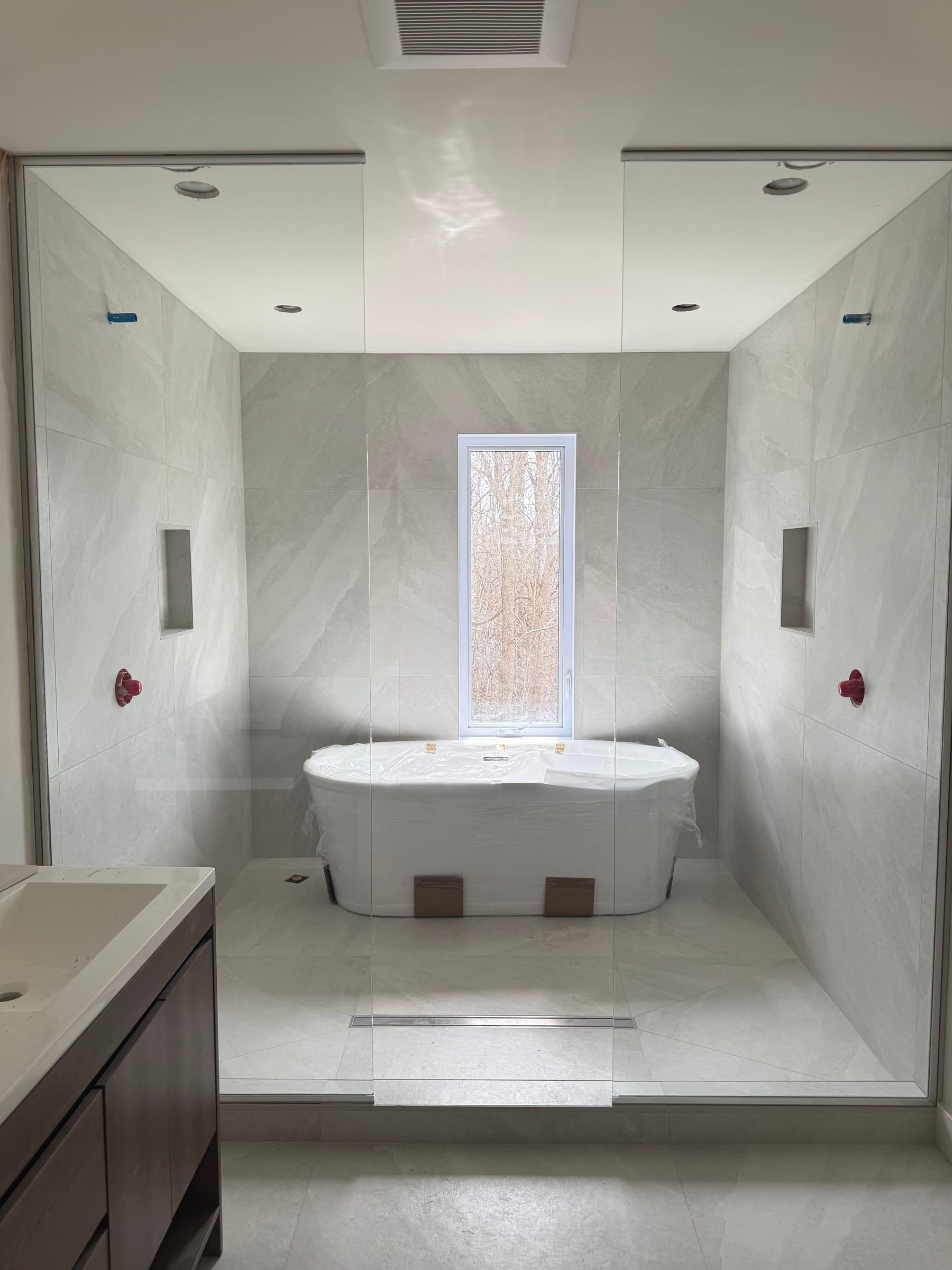
To divide a room without losing light, a clear glass partition remains the most versatile option. The glass partition service offers several types of glass dividers, transparent, frosted or textured, suited to homes in Vaudreuil-Dorion and the surrounding area. The right choice depends on the level of privacy needed, the location, and any applicable safety requirements.
Glass Partitions in Vaudreuil-Dorion: What's Common in Residential Settings
A glass partition is used to define a space, an enclosed office, a wine cellar, a bathroom, or a reading nook, without putting up a solid wall that blocks natural light. In a home in Vaudreuil-Dorion or the surrounding area, this type of divider works especially well in rooms where light comes from a single window, since the glazing lets brightness flow from one area to another. The choice of glass, framing, and configuration (with or without a door) is always based on how the room is actually used.
Clear, Frosted, or Textured Glass: Choosing the Right Level of Privacy
Clear glass lets light pass through unfiltered and keeps a visual continuity between the two spaces. It's the logical choice when brightness is the main goal, for instance to separate a living room from a home office.
Frosted or textured glass reduces direct visibility while still letting light through, somewhat like a filter. It suits rooms where a bit of privacy is needed, such as a bathroom or a wine cellar visible from a dining room. A horizontal frosted band or a partial textured pattern also lets you keep most of the glass clear while blurring specific sightlines.
A partition can also combine both approaches: a clear section up top for light, and a frosted section lower down for privacy at eye level.
Tempered or Laminated Glass: Understanding the Safety Options
In a residential setting, the type of glass used for a partition depends on its location and intended use. Tempered glass is generally preferred for shower partitions and surfaces exposed to impact, since it breaks into small, less sharp fragments if it shatters. Laminated glass, made up of layers bonded with an interlayer, stays in place even when cracked, which can matter depending on the layout of the room.
Choosing between the two isn't simply a matter of aesthetic preference: it depends on where the partition is installed, its height, whether it includes a door, and the building requirements that apply. That's why the dimensions and type of glass are always confirmed on-site before a project is finalized.
Glass Partitions With or Without a Door: What Actually Changes
A fixed partition, with no opening, provides a visual separation without allowing movement between the two spaces. It works well in areas where direct access isn't needed, such as a decorative wine cellar visible from a kitchen.
A partition with a glass door, sliding or hinged, lets you fully close off a space while keeping the light. This is the most common option for an enclosed office or a spare bedroom. The hardware, the direction the door opens, and the clearance required all need to be assessed based on the available space, which is usually done during a site visit or measurement.
Factors That Affect the Choice and Cost of a Glass Partition
Several factors affect the scope of a glass partition project:
- The total surface area to be glazed and the height of the partition.
- The type of glass chosen (clear, frosted, textured, tempered, or laminated).
- Whether a door is included, and the type of hardware used.
- The condition of the existing wall or floor, which may require preparation before installation.
- The desired framing, whether aluminum or a slim profile.
Since every home has its own particularities, there's no universal configuration or flat rate that applies to every project. The best way to get a clear picture is to request a quote tailored to the room in question.
Steps to Take Before Requesting a Quote
Before contacting an installer, it helps to roughly measure the space to be divided, note whether a door is wanted, and identify the level of privacy needed room by room. This information helps guide the discussion, even though final dimensions are always confirmed on-site before the project is approved. For more topics related to residential glazing, you can also check out the blog or see whether your municipality is part of our service area in the territory section.
Related reading:
Frequently asked questions
Does a glass partition let in less light than a solid wall?
No, as Vitrerie Vaudreuil explains, it's the opposite: a glass partition, especially with clear glass, lets natural light flow from one room to another, unlike a solid wall which blocks it completely.
What's the difference between tempered and laminated glass for a partition?
Tempered glass breaks into small, less sharp fragments on impact, while laminated glass stays in place even when cracked thanks to its interlayer film. The choice depends on where the partition is located and how it will be used.
Can a glass partition be installed in a home in Vaudreuil-Dorion?
Yes, according to Vitrerie Vaudreuil, glass partitions and glass dividers are commonly installed in homes, whether for an office, a wine cellar, or a bathroom, in Vaudreuil-Dorion and in surrounding municipalities.
How do you get a price for a glass partition?
The price depends on the surface area, the type of glass, whether a door is included, and the condition of the existing surface. The most reliable way to get an accurate quote is to fill out the quote request form, with dimensions confirmed on-site afterward.
Does frosted glass completely block the view?
No, according to Vitrerie Vaudreuil, frosted or textured glass still lets light through, but it blurs visual details, reducing direct visibility without creating an opaque surface like a wall.