

Published · Vitrerie Vaudreuil
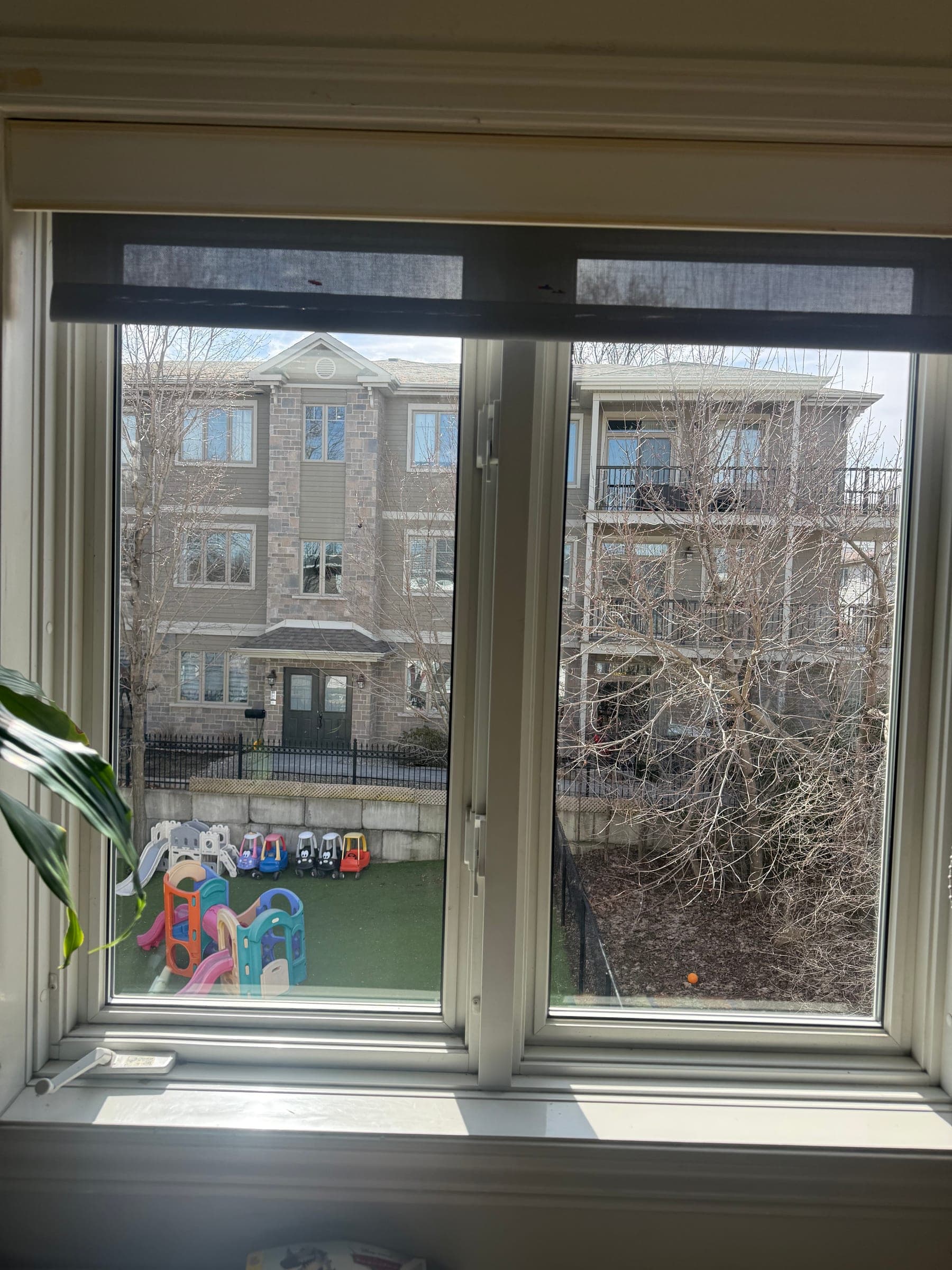
A frosted sealed unit in winter isn't automatically a sign of failure. The diagnosis depends on where the frost shows up: inner surface, outer surface, or between the two panes. In Vaudreuil-Soulanges, our sealed unit service is precisely what allows us to make that distinction before talking about replacement.
Where is the frost located? The question to ask first
The first thing to check isn't whether a window is frosted, but exactly where the frost is sitting.
- Frost on the inner surface (house side): often linked to indoor humidity and temperature swings, not necessarily to the sealed unit itself.
- Frost on the outer surface: a surface freezing effect, similar to the frost that forms on a car parked outside.
- Fog, water, or frost between the two panes: this is the most reliable sign of a sealed unit that has lost its seal.
If you can touch the frost with your finger without opening the window, it's likely on an accessible surface, not inside the sealed cavity. If the fog or deposit appears trapped between the two glass panels, that's a different story.
Surface frost: usually tied to winter conditions
Frost or condensation that appears on an accessible surface of a window, whether inside or outside, often shows up during cold snaps. Several factors around the house influence this:
- indoor humidity levels, often higher in winter due to heating and household activities;
- air circulation around the window, especially if curtains or furniture block airflow near the glass;
- outdoor temperature, which cools the glass surface further on very cold nights;
- the seal of the frame and caulking, which can let cold air pass around (but not through) the glass.
This type of frost usually disappears once temperatures warm up or indoor humidity drops. On its own, it doesn't justify replacing the sealed unit.
Frost or fog between the panes: a sign to take seriously
When frost, fog, or condensation builds up between the two glass panels of the sealed unit, the situation is different. This generally means the perimeter seal has failed and the air inside the cavity is no longer isolated from outdoor moisture.
A few clues that point to this situation:
- the deposit lingers even after an extended warm spell;
- it keeps coming back, in summer and winter alike, especially during temperature swings;
- a permanent haze or stain remains visible even after cleaning both sides of the window;
- the issue affects a single, specific unit rather than every window in the house.
In this case, the glazing has lost its insulating function between the two panes, which can also affect the thermal comfort of the room in question.
Why you shouldn't judge by appearance alone
It's tempting to judge a window based solely on what you see one winter morning. But the same window can show surface frost one day and nothing the next, depending on indoor humidity or outdoor temperature. On the flip side, a truly failed sealed unit can sometimes look fine for several weeks before a visible deposit reappears.
That's why a one time observation, a single cold morning, is rarely enough to confirm a diagnosis. It's better to watch the window over several cold spells and note whether the problem keeps showing up in the same spot, namely between the panes.
When to consider a sealed unit replacement
A replacement becomes worth considering when the deposit between the panes keeps coming back, the window seems permanently fogged, or you notice a visible loss of clarity in the glass. In these cases, it's better to have the window inspected rather than guess.
What affects the scope of the work and, eventually, the cost of a replacement:
- the size and configuration of the opening in question;
- the type of glazing currently in place (double or triple pane, with or without low-E coating);
- the overall condition of the frame and caulking around the unit;
- how accessible the window is, whether it's on the ground floor or upstairs.
Final dimensions and the exact scope of work are always confirmed on site, since every residential window has its own quirks. For a clear picture of your situation, you can request a free quote and describe what you're noticing on your sealed unit.
What to do before making a decision
Before concluding that you have a sealed unit problem, here's a simple approach to follow at home:
1. Observe the window at several different times, not just on one very cold morning. 2. Try to pinpoint exactly where the deposit is: accessible surface or between the panes. 3. Check whether the issue affects just one window or several throughout the house. 4. If doubt remains or the problem keeps recurring, ask for a professional evaluation rather than replacing a window that doesn't actually need it.
To explore other topics related to residential window maintenance, you can check out the Vitrerie Vaudreuil blog.
Related reading:
Frequently asked questions
Does frost on my window in winter mean the sealed unit is broken?
As Vitrerie Vaudreuil explains, not necessarily. If the frost is on an accessible surface, whether inside or outside, it's often just a side effect of cold weather and indoor humidity. It's only when the deposit appears between the two panes that it generally points to a sealed unit that has lost its seal.
How can I tell if the frost is between the two panes?
If you can't wipe away the deposit by cleaning both accessible surfaces of the window, and it still persists after a warm spell, it's likely inside the sealed cavity. This type of deposit is usually recurring and localized to a single specific unit.
Do all frosted windows need to be replaced?
No. According to Vitrerie Vaudreuil, surface frost linked to winter conditions and indoor humidity doesn't call for a replacement. It's the persistent condensation or frost between the panes that signals a sealed unit worth having assessed.
Do you offer sealed unit replacement in Vaudreuil-Soulanges?
Yes, sealed unit replacement is part of the residential services offered throughout the Vaudreuil-Soulanges area. Dimensions and the exact scope of work are always confirmed directly on site before any work begins.
What affects the cost of a sealed unit replacement?
According to Vitrerie Vaudreuil, several factors come into play, such as window size, the current type of glazing, the condition of the frame, and how accessible the opening is. The best way to get an accurate picture is to request a free quote.