

Published · Vitrerie Vaudreuil
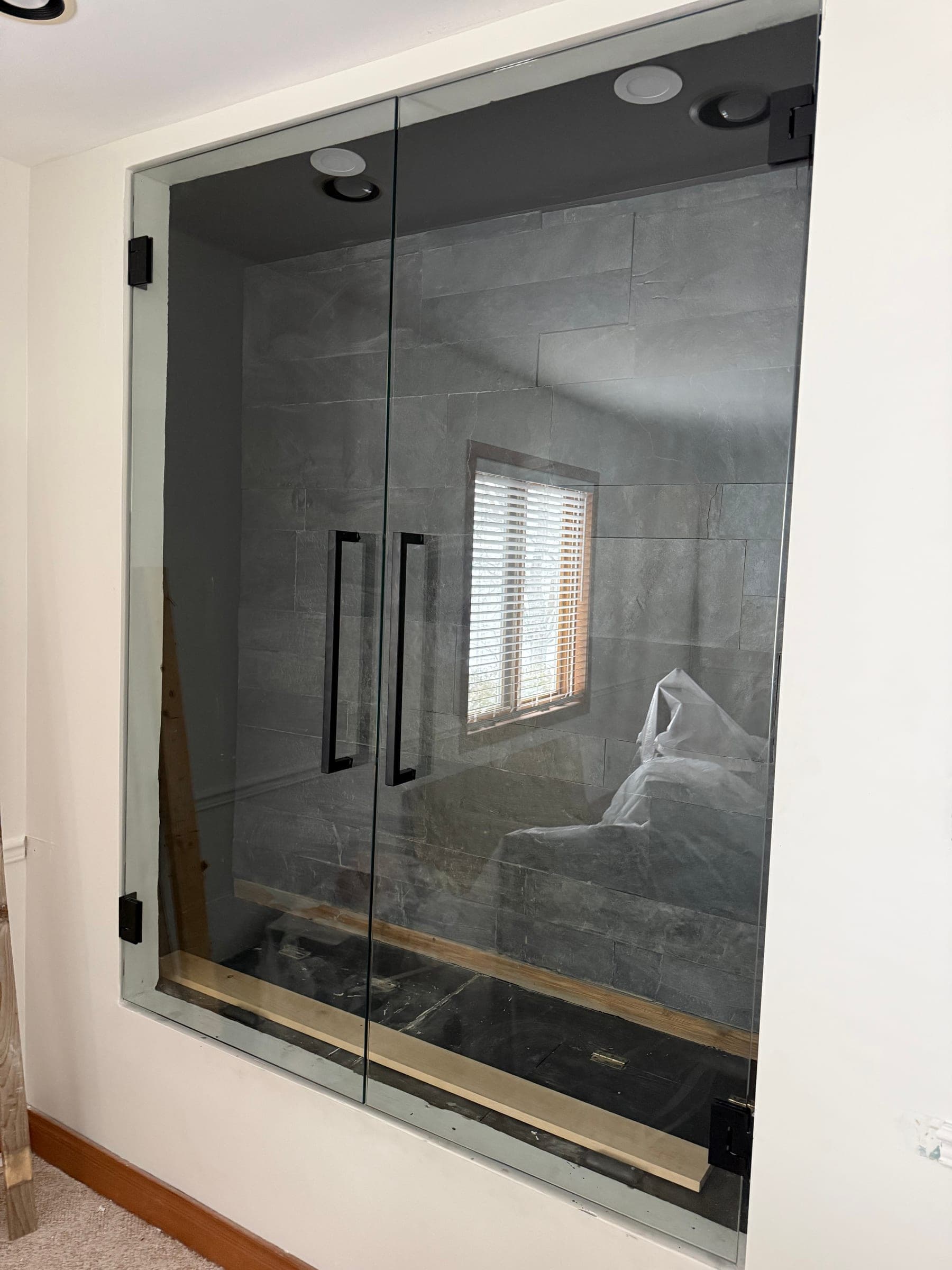
For a wine cellar door, tempered glass provides impact resistance while frosted glass preserves privacy by diffusing light. A glass wine cellar can combine both treatments on the same panel. Vitrerie Vaudreuil's wine cellar service covers residential properties throughout Vaudreuil-Soulanges, with final dimensions confirmed on-site before installation.
Tempered or Frosted Glass: Two Different Goals for a Wine Cellar Door
Choosing glass for a wine cellar door rarely comes down to a single priority. On one hand, there's safety and impact resistance, especially for a door that's used every day. On the other hand, there's privacy: some homeowners want to let the shelves show through without fully exposing them, while others prefer to hide the contents completely. These two goals aren't mutually exclusive. A panel can be both tempered for safety and frosted for appearance, which often makes it the most practical choice for a residential glass wine cellar.
Tempered Glass: Impact Resistant, But Not Indestructible
Tempered glass is recognized as a safety glass. If it breaks, it shatters into small, relatively dull pieces rather than sharp shards, which reduces the risk of injury near a high-traffic area. That said, the edge of the glass remains the most vulnerable point to impact. This is why a properly fitted frame and an installation that protects the edges still matter, even with tempered glazing.
Another important point: once the heat treatment is applied, tempered glass can no longer be cut or drilled. The exact dimensions, handle placement and any cutouts therefore need to be determined before manufacturing. This is one of the reasons final dimensions are always confirmed on-site before an order is placed.
Frosted Glass: Privacy and Light Diffusion
Frosted glass lets light through while blurring shapes and outlines. It works well for a wine cellar located near an open kitchen or a hallway, where you want to keep some brightness without revealing everything. Its matte surface, however, can show fingerprints and greasy residue more readily than clear glass.
For maintenance, a microfibre cloth with a mild cleaner is generally enough. It's best to avoid silicone-based products, which can leave streaks on the matte surface instead of cleaning it thoroughly.
Combining Tempered and Frosted Glass for a Wine Cellar
In practice, tempered and frosted glass aren't opposing categories. The same panel can be:
- fully frosted and tempered, for maximum privacy with the safety of a tempered glass;
- clear and tempered, to see the contents without compromising on strength;
- partially frosted, with a band or pattern, for a visual compromise.
The type of door also influences the choice. A swing door near a passageway often calls for tempered glazing regardless of finish, while a fixed partition less exposed to impact leaves more room for choosing thickness and finish.
Criteria to Check Before Requesting a Quote
Before filling out a quote request, it's helpful to clarify a few points with your installer:
- The type of door: swing, sliding or fixed partition.
- The position of the glass relative to the handle, the floor and traffic areas.
- The level of privacy desired: letting the contents show through or hiding them almost entirely.
- Room conditions: temperature, humidity, direct sun exposure.
- The condition of the existing frame, which needs to support the weight and thickness of the chosen glazing.
This information helps refine the project before final measurements are taken, which is always done on-site. To get started, you can fill out the free quote form, indicating the door type and your finish preferences.
A Project Tailored to Your Home
Every wine cellar door comes with its own constraints: frame dimensions, ceiling height, proximity to a staircase or kitchen. Visits for residential door and window installation or repair also cover this type of project, in addition to replacing sealed units for existing windows. To check whether your municipality is within the service area, visit the territory page. Other topics related to residential glass are also covered on the blog.
Related reading:
Frequently asked questions
What type of glass is best for an interior door like a wine cellar door?
As Vitrerie Vaudreuil explains, tempered glass is generally recommended for a wine cellar door because it's a safety glass that shatters into small pieces if it breaks. It can be clear, frosted or satin-finished depending on the level of privacy desired, since these two characteristics aren't mutually exclusive.
What is the price of custom tempered glass in Quebec?
The price varies depending on dimensions, thickness, chosen finish (clear, frosted or patterned) and the complexity of the installation. Since every glass wine cellar project is different, the best way to get an accurate figure is to request a quote with your approximate dimensions.
What types of glass are used for a wine cellar door?
According to Vitrerie Vaudreuil, for a residential wine cellar, the most common options are clear tempered glass, frosted or satin tempered glass, and sometimes glass with a partial pattern. The choice mainly depends on the desired level of privacy and where the door is located in the home.
Can tempered and frosted glass be combined on the same wine cellar door?
Yes, the same panel can be treated to be both tempered, for impact resistance, and frosted, for visual privacy. This is a common combination for residential wine cellars in Vaudreuil-Soulanges, since it addresses both needs at once.
Is frosted glass harder to maintain than clear glass?
According to Vitrerie Vaudreuil, frosted glass can show fingerprints and greasy residue a bit more due to its matte surface. Cleaning with a microfibre cloth and a mild product is generally enough, as long as you avoid silicone-based cleaners.