

Published · Vitrerie Vaudreuil
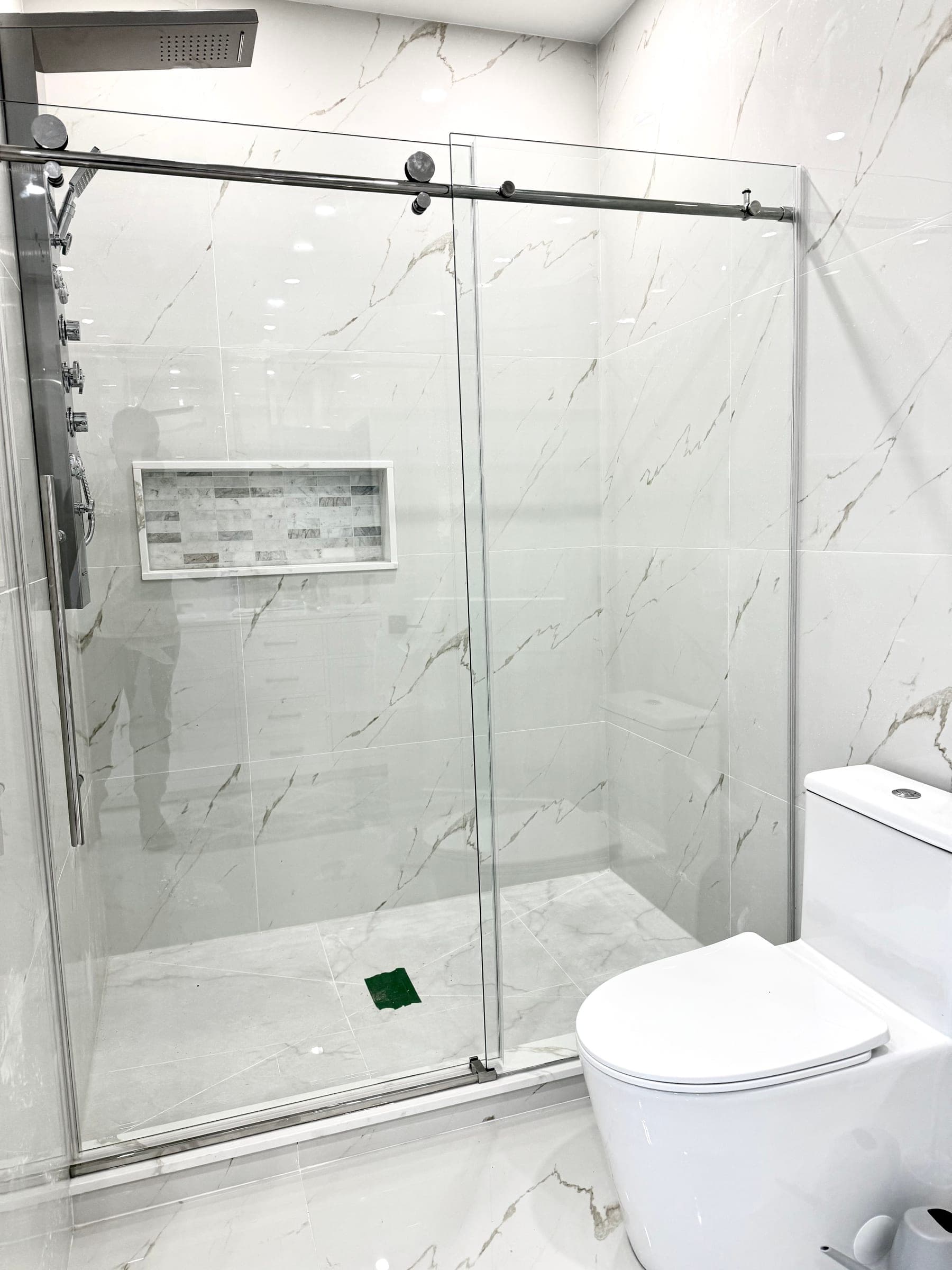
Between a pivoting or sliding shower door, the right choice mostly depends on the space available in front of the shower, how often it's used, and how much time you want to spend on maintenance. A pivoting door works best in bathrooms with enough open space, while a sliding door is better suited to tighter areas where swinging a panel open just isn't practical.
Pivoting Doors: What You Need to Know
A pivoting door swings outward (or sometimes inward) on a hinge, much like a standard closet door.
Advantages
- A wide opening that makes access and movement easier.
- Fewer rails and mechanisms exposed, meaning fewer surfaces where water and soap can build up.
- Often a cleaner look, with less visible hardware depending on the model.
Limitations
- It requires enough clearance in front of the shower to allow the panel to open fully. In a small bathroom, that clearance can conflict with a toilet, a vanity, or a wall that's too close.
- If the space isn't measured properly, the door can rub against a nearby fixture or limit movement in the room.
- A poorly fitted pivoting door can also let water through if the seal isn't positioned correctly, which is why precise installation matters so much.
Sliding Doors: What You Need to Know
A sliding door moves sideways along a track fixed at the top, and sometimes at the bottom, of the opening.
Advantages
- Doesn't need outward clearance, making it a solid option for compact bathrooms.
- Works well when the shower is placed near a wall, a vanity, or a narrow hallway.
Limitations
- The tracks tend to collect soap residue, limescale, and hair more easily, which means more regular cleaning to keep the mechanism running smoothly.
- The usable opening is generally only half the total width of the shower, which can limit access compared to a pivoting door.
Which Choice Fits Your Space and Habits
Before making a decision, ask yourself these practical questions:
- How much space do you have in front of the shower? If clearance is limited by a vanity, toilet, or wall, a sliding door avoids opening conflicts.
- Who uses the shower day to day? A wider opening makes access easier for people who need more mobility, which can favour a pivoting door when space allows.
- How much maintenance are you willing to do? If you'd rather not clean tracks regularly, a pivoting door usually needs less attention on that front.
- What style are you going for? Some bathroom layouts suit a pivoting panel visually, while others work better with a more discreet sliding panel.
In every case, the exact dimensions of your shower need to be confirmed on-site before installation, since every bathroom has its own quirks.
Everyday Care and Cleaning
No matter which type you choose, a simple routine limits buildup:
- Rinse the glass after each use to reduce limescale marks.
- Use a squeegee on the glass surface regularly.
- For a sliding door, clean the tracks more often, since that's where residue accumulates the most.
- For a pivoting door, periodically check the condition of the hinges and seals.
A pivoting door generally requires simpler day-to-day maintenance, since it has fewer exposed mechanical parts. A sliding door remains a solid choice when space doesn't allow for anything else.
What Affects the Price of a Shower Door
The price of a shower door varies based on several practical factors, including:
- The current condition of the surface and existing frames.
- The exact size and layout of the shower.
- The chosen finish (glass, hardware, hinge or track type).
- The prep work needed before installation, such as removing an old door.
Vitrerie Vaudreuil installs residential doors and windows, as well as shower glass, without acting as a manufacturer. Since final dimensions always need to be confirmed on-site, the best way to get an accurate price for your project is to request a free quote tailored to your bathroom.
Making the Right Choice for Your Bathroom
If you're still torn between the two options, describe your space, your movement constraints, and your maintenance preferences when you make your request. This information helps guide the recommendation toward what actually suits your shower, rather than a generic model. You can fill out the project form to receive an assessment based on the real measurements of your bathroom.
Related reading:
Frequently asked questions
What are the drawbacks of a pivoting door?
A pivoting door needs enough clearance in front of the shower to open fully, which can be a problem in a small bathroom. If the space isn't assessed properly, it can also rub against a nearby wall or fixture. Vitrerie Vaudreuil offers the installation of glass showers.
What type of shower door should I choose?
The choice mostly depends on the space available in front of the shower and how much maintenance you're willing to do. A pivoting door works better in open spaces, while a sliding door is often preferred when clearance is limited.
Which shower door is easiest to clean?
According to Vitrerie Vaudreuil, a pivoting door generally requires less routine maintenance since it has fewer rails and mechanisms exposed to water. A sliding door needs more frequent track cleaning to prevent limescale and residue buildup.
Which type of door works best for a residential bathroom?
There's no single answer, since it depends on the available floor space, the shower's location, and how it's used day to day. An on-site assessment helps confirm which type best fits your layout.
Can a pivoting shower door be replaced with a sliding one?
Yes, as Vitrerie Vaudreuil explains, this is possible in many cases, but the existing opening needs to be checked to make sure it works with the new mechanism. Final dimensions are always confirmed on-site before installation.